Motion Control

Video motion guide

Find the best free motion control ai video generator for your idea

The best free motion control ai video generator is the one that gives you a usable clip for the movement you have in mind. Describe the action first, then check what the destination tool actually supports and whether any free access applies.

Check access terms at the destination
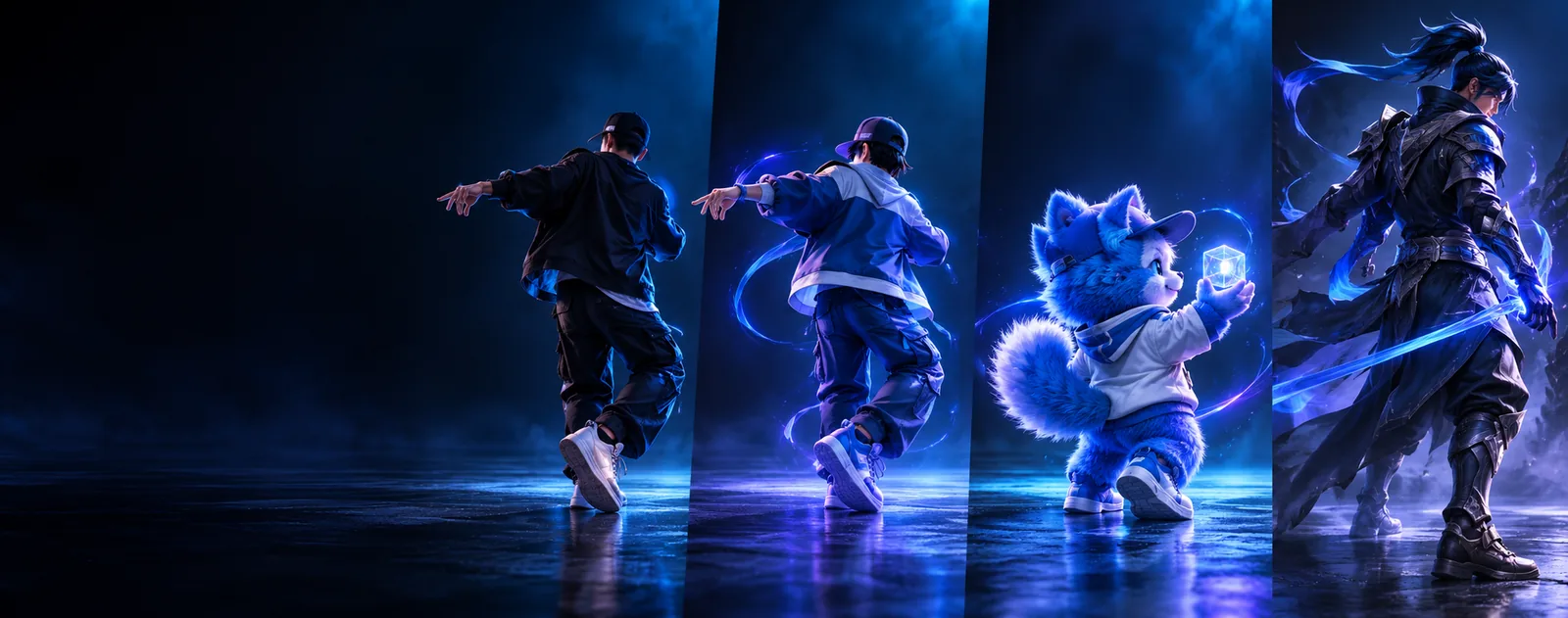
Video motion concept shown in Motion Control landing imagery

A useful clip starts with a clear action

Different creators need different kinds of movement. These starting points help you decide whether to describe an action, work from an image, or examine an existing clip.

Social video creator

You need a short character movement that reads clearly on a small screen, such as a turn followed by a pause.

Write the action in sequence and judge the result by whether the subject stays recognizable throughout. For broader access questions, see motion control video free.

motion control video free

Storyboard artist

You have a still frame and want to explore how its subject might move without discarding the composition.

Separate the desired subject action from camera movement, then consider whether an image-led workflow suits the frame.

image to video ai

Video editor

You already have footage but want to test a different visual treatment while keeping its timing in mind.

Look at a video-led workflow rather than assuming a written prompt will preserve every beat of the source.

video to video ai

Three decisions shape the motion

Treat these as a step-by-step brief, not a promise that every generator offers the same controls.

  1. 1

    Choose the moving subject

    Identify who or what moves and what must remain consistent. A person walking across a room is more specific than simply asking for dynamic motion.

  2. 2

    Describe the action in order

    State the starting pose, the main movement, and the ending pose. If the camera should stay still, say so; otherwise, subject motion and camera motion can be easy to confuse.

  3. 3

    Review the entire clip

    Check the beginning and end as well as the middle. Watch for changes in identity, unnatural limbs, drifting backgrounds, or a camera move that overwhelms the intended action.

Pick the next workflow to investigate

The input you already have can narrow your search more effectively than a broad feature list.

Compare the input before the output

A motion-specific brief and a general video brief can produce very different evaluations. Use this table to decide what to inspect, not to assume a particular tool has these features.

Motion-specific brief
General video brief

Primary question

Motion-specific brief

Does the intended movement happen?

General video brief

Does the overall scene look convincing?

Subject direction

Motion-specific brief

Names an action, its order, and its endpoint.

General video brief

May describe appearance without a precise action.

Camera direction

Motion-specific brief

Separates camera movement from subject movement.

General video brief

May leave the camera behavior open.

Continuity check

Motion-specific brief

Tracks pose and identity across the clip.

General video brief

Often focuses on the strongest-looking frame.

Useful source

Motion-specific brief

A clear action description, with reference material if supported.

General video brief

A scene concept, image, or existing video, depending on the workflow.

Common failure

Motion-specific brief

The action changes halfway through or ends in the wrong pose.

General video brief

The scene looks appealing but does not convey the intended action.

Know the limits before you commit

A search for a free generator does not establish the access terms or capabilities of the tool you reach.

Free access is not guaranteed

This page cannot verify that generation, downloads, or particular features are available without payment at the destination.

Workaround

Check the destination's current terms before investing time in a detailed project.

A prompt cannot guarantee precise motion

Written direction may be interpreted loosely, especially when several actions, subjects, and camera moves compete in one request.

Workaround

Begin with one subject and one short sequence; assess the result before adding complexity.

Output conditions may vary

This page cannot promise a duration, resolution, file format, watermark policy, or download option for a generated clip.

Workaround

Confirm the available output and usage terms where the clip is created.

Reference control may differ

Not every video workflow accepts an image or a source clip, and accepting one does not guarantee exact preservation of its details.

Workaround

Choose a workflow around the input you actually have, then test continuity across the full result.

Take a focused motion brief forward

Start with one clear movement

Bring a short action description to the destination and verify its available workflow and access conditions there. You will have a better basis for judging a result when you know which subject should move, how the camera should behave, and where the action should end.

Explore video creation
  • Name the subject and action
  • Separate action from camera movement
  • Check access and output terms

Questions about choosing a generator

Start with the movement you need, then compare tools against that specific action rather than a showcase frame. Verify current access terms at each destination; a search result using the word free does not establish which features or outputs are included.

Name the subject, describe the action in order, and state whether the camera should move. An ending pose or stopping point makes it easier to tell whether the generated motion followed your brief.

A written prompt can communicate intent, but it does not guarantee frame-by-frame accuracy. If exact timing matters, look for a workflow that accepts an appropriate reference and evaluate the entire result before relying on it.

Not necessarily. An image can supply the starting appearance, while motion direction describes what should happen over time; the degree of control depends on the destination's actual capabilities.

Start creating
Start creating